Choosing the right type of commercial property is one of the most important decisions for investors and business owners today.
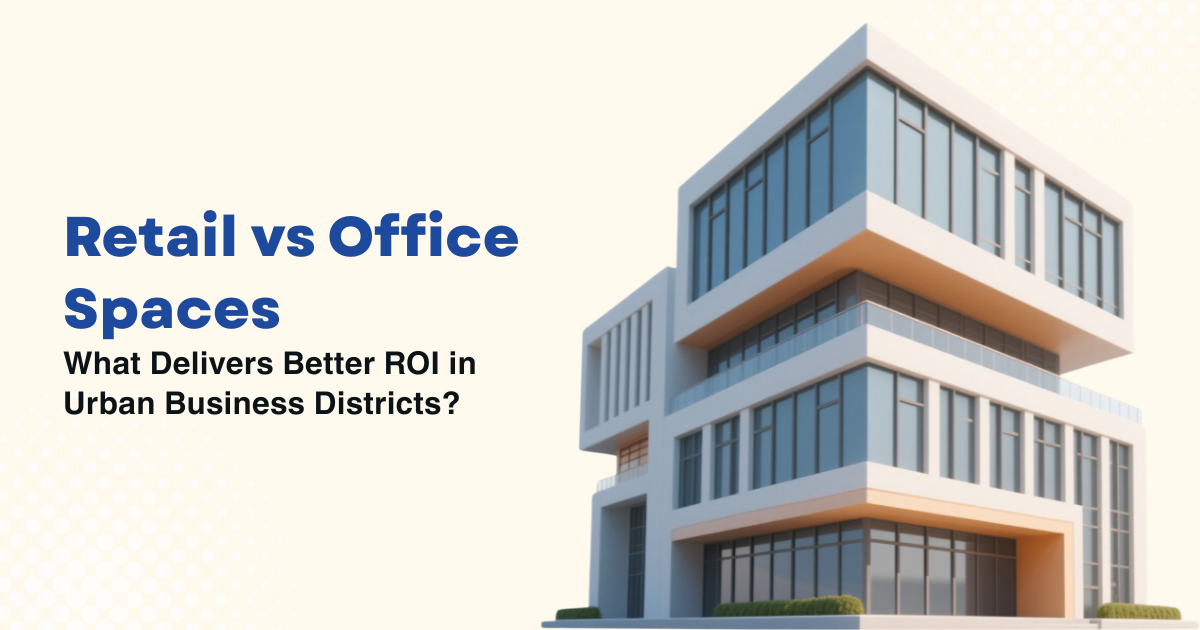
In growing urban areas, the debate often comes down to one question: retail or office space—which delivers better returns? This question becomes even more relevant when evaluating commercial property ROI in West Delhi, where demand for quality commercial spaces continues to rise.
Urban business districts in West Delhi have evolved rapidly over the years. Locations that once served limited commercial needs are now active business zones with offices, retail showrooms, food outlets, and service brands operating side by side. With improved infrastructure, metro connectivity, and dense residential catchments, these districts offer strong opportunities—but also require smart investment choices.
Retail spaces and office spaces perform very differently, even within the same location. Retail properties often benefit from high footfall, visibility, and impulse-driven customers, making them attractive for brands and service businesses. Office spaces, on the other hand, are known for stability, longer lease terms, and predictable rental income. Both can deliver good returns, but the risks, timelines, and income patterns are not the same.
For investors focused on commercial property ROI in West Delhi, understanding these differences is critical. A higher monthly rent does not always mean better returns, and a stable tenant does not always guarantee growth. Factors like vacancy risk, appreciation potential, tenant demand, and long-term market strength play a major role in determining real ROI.
This blog breaks down retail and office investments in a clear, practical way. By comparing returns, risks, and long-term potential, it helps you decide which option aligns better with your financial goals in urban business districts.
Key Takeaways
-
Commercial property ROI in West Delhi depends on asset type, not just location
-
Retail spaces may offer higher rental yield but come with higher sensitivity to market changes
-
Office spaces provide stable income through longer leases and lower vacancy risk
-
Footfall drives retail success, while working population supports office demand
-
Prime urban business districts reduce risk for both retail and office investments
-
The best ROI strategy often combines retail and office assets for balance
Understanding ROI in Commercial Real Estate
Before comparing retail and office spaces, it is important to understand what “ROI” really means in commercial property.
ROI is not just the rent you receive every month. A strong commercial ROI is built on four key pillars:
-
Rental Yield – How much rent the property generates compared to its purchase price
-
Occupancy Stability – How easily the space stays leased
-
Capital Appreciation – Growth in property value over time
-
Risk Management – Vacancy risk, tenant quality, and market resilience
A property that gives slightly lower rent but stays occupied for years may deliver better ROI than a high-rent property that stays vacant often.
With this in mind, let’s look at retail and office spaces separately.
What Is Retail Commercial Property?
Retail commercial property includes spaces designed for customer-facing businesses, such as:
-
High-street shops
-
Showrooms
-
Food outlets and cafes
-
Clinics, salons, and service centres
-
Food courts and QSR units
Retail spaces depend heavily on footfall, visibility, and location. In urban business districts, retail units are often located on lower floors or street-facing areas where people naturally pass by.
What Is Office Commercial Property?
Office commercial property is designed for workplace operations, such as:
-
Corporate offices
-
Startup and agency offices
-
Back-office operations
-
Consulting and professional services
Office spaces rely more on connectivity, layout, and working population rather than walk-in customers. These properties are usually leased for longer periods and generate stable income when occupied.
Rental Yield: Retail vs Office
Retail Rental Yield
Retail spaces in busy urban districts often generate higher rental yields compared to offices. This is because:
-
Retail tenants are willing to pay a premium for visibility
-
High footfall directly impacts their revenue
-
Ground-floor and corner units command higher rents
In strong commercial districts, retail yields can outperform offices, especially for food outlets, clinics, and daily-use brands.
However, retail rent is more sensitive to:
-
Market slowdowns
-
Consumer spending trends
-
Competition from nearby shops
Office Rental Yield
Office spaces usually offer moderate but steady rental yields. The rent per square foot may be lower than retail, but:
-
Lease periods are longer
-
Rent payments are predictable
-
Tenant churn is lower
For investors who prefer consistency over spikes, office rental income feels safer and easier to manage.
Verdict:
Retail may give higher rent, but office offers steadier income.
Vacancy Risk: Which Is Safer?
Retail Vacancy Risk
Retail vacancy risk depends heavily on:
-
Location quality
-
Footfall consistency
-
Business success of the tenant
If a retail business shuts down, the space may stay vacant longer—especially if rent expectations are high.
However, in established urban business districts with daily footfall, retail vacancies are usually filled faster than in standalone locations.
Office Vacancy Risk
Office spaces generally have lower vacancy risk when:
-
The location is well connected
-
The building has modern facilities
-
Unit sizes are flexible
Office tenants often sign leases for 3–9 years, which reduces frequent turnover.
Verdict:
Offices usually have lower vacancy risk, especially in stable business districts.
Tenant Stability and Lease Structure
Retail Tenants
Retail tenants:
-
Are more sensitive to sales performance
-
May renegotiate rent during slow periods
-
Can exit if business does not work
That said, strong brands and franchise operators are long-term tenants and provide excellent stability.
Office Tenants
Office tenants:
-
Plan operations long-term
-
Invest in interiors and fit-outs
-
Prefer stability over relocation
Once an office tenant settles in, they are less likely to move frequently.
Verdict:
Office tenants are usually more stable, but strong retail brands can match that stability.
Capital Appreciation: Long-Term Value Growth
Retail Appreciation
Retail properties in high-footfall areas tend to appreciate well because:
-
Retail supply is limited
-
Prime locations become scarce
-
Ground-floor retail is always in demand
In mature urban districts, retail appreciation is often driven by location scarcity rather than market hype.
Office Appreciation
Office property appreciation depends on:
-
Infrastructure growth
-
Demand from corporates and start-ups
-
Area development
Office spaces in well-planned commercial districts grow steadily but may not see sharp price jumps like prime retail.
Verdict:
Retail often appreciates faster in prime locations; office appreciates steadily over time.
Impact of Footfall and Daily Activity
Retail thrives on human movement.
Office thrives on working population.
Urban business districts that combine:
-
Offices
-
Retail
-
Food
-
Transit access
create the best environment for both asset classes.
Retail benefits from:
-
Office workers
-
Shoppers
-
Metro commuters
Office benefits from:
-
Nearby amenities
-
Food and retail convenience
This is why mixed-use commercial districts perform better than isolated developments.
Operating Costs and Management
Retail Management
Retail properties may require:
-
Higher maintenance
-
Fit-out coordination
-
Frequent tenant interaction
But they also allow:
-
Faster rent revisions
-
Premium pricing for better locations
Office Management
Office properties are usually:
-
Easier to manage
-
Less operationally intensive
-
More predictable
For passive investors, offices feel simpler.
Market Resilience During Economic Cycles
During slowdowns:
-
Retail linked to essentials performs well
-
Luxury retail may struggle
-
Offices with long leases remain stable
During growth phases:
-
Retail rents increase faster
-
Office demand rises steadily
Verdict:
A balanced district protects both retail and office investments.
Which Delivers Better ROI in Urban Business Districts?
There is no single correct answer—but there is a smarter choice based on your goal.
Retail Is Better If:
-
You want higher rental yield
-
You invest in prime footfall locations
-
You can handle slightly higher risk
Office Is Better If:
-
You prefer stable, long-term income
-
You want lower vacancy risk
-
You are a passive investor
Best Strategy:
Many seasoned investors combine retail + office in their portfolio to balance risk and returns.
Final Conclusion
In urban business districts, both retail and office spaces can deliver strong ROI—but in different ways.
Retail rewards investors who understand location, footfall, and brand demand. Office rewards investors who value consistency, long-term leases, and operational simplicity.
In mature commercial zones like District Centre Janakpuri, the real advantage lies in choosing the right asset at the right micro-location, not just choosing retail or office blindly.
For investors focused on commercial property ROI in West Delhi, the smartest approach is informed decision-making backed by ground-level market understanding—not trends or assumptions.
Want help choosing the right retail or office investment?
Explore verified commercial options with expert guidance to match your budget, risk profile, and ROI goals.